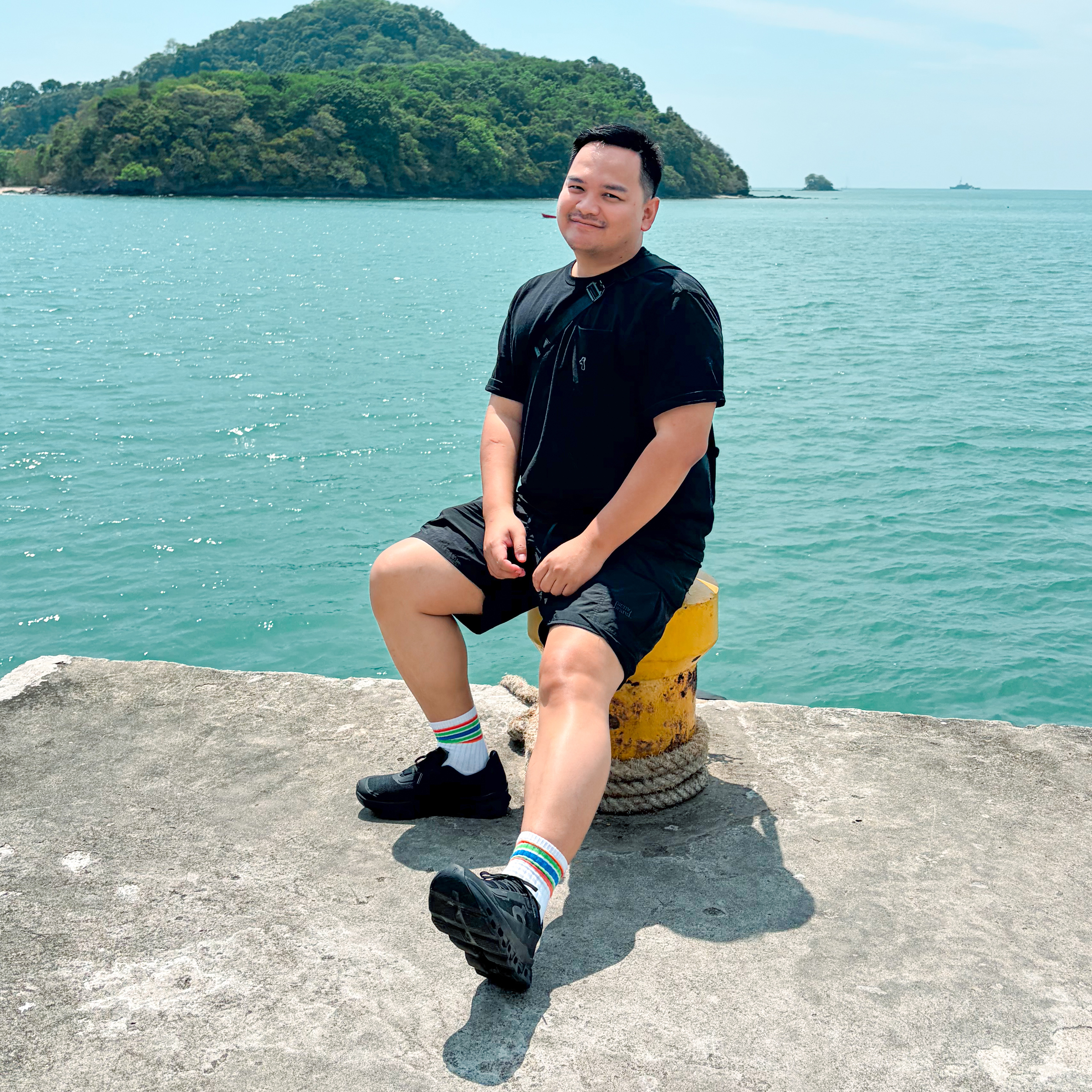
Who says summer isn’t a good time to visit Japan? I used to think the same thing. Just imagining the heat and having to walk around under the sun all day was already exhausting enough, haha. But after visiting Fukuoka in July—and discovering that my trip happened to coincide with the Hakata Gion Yamakasa festival—I completely changed my mind.
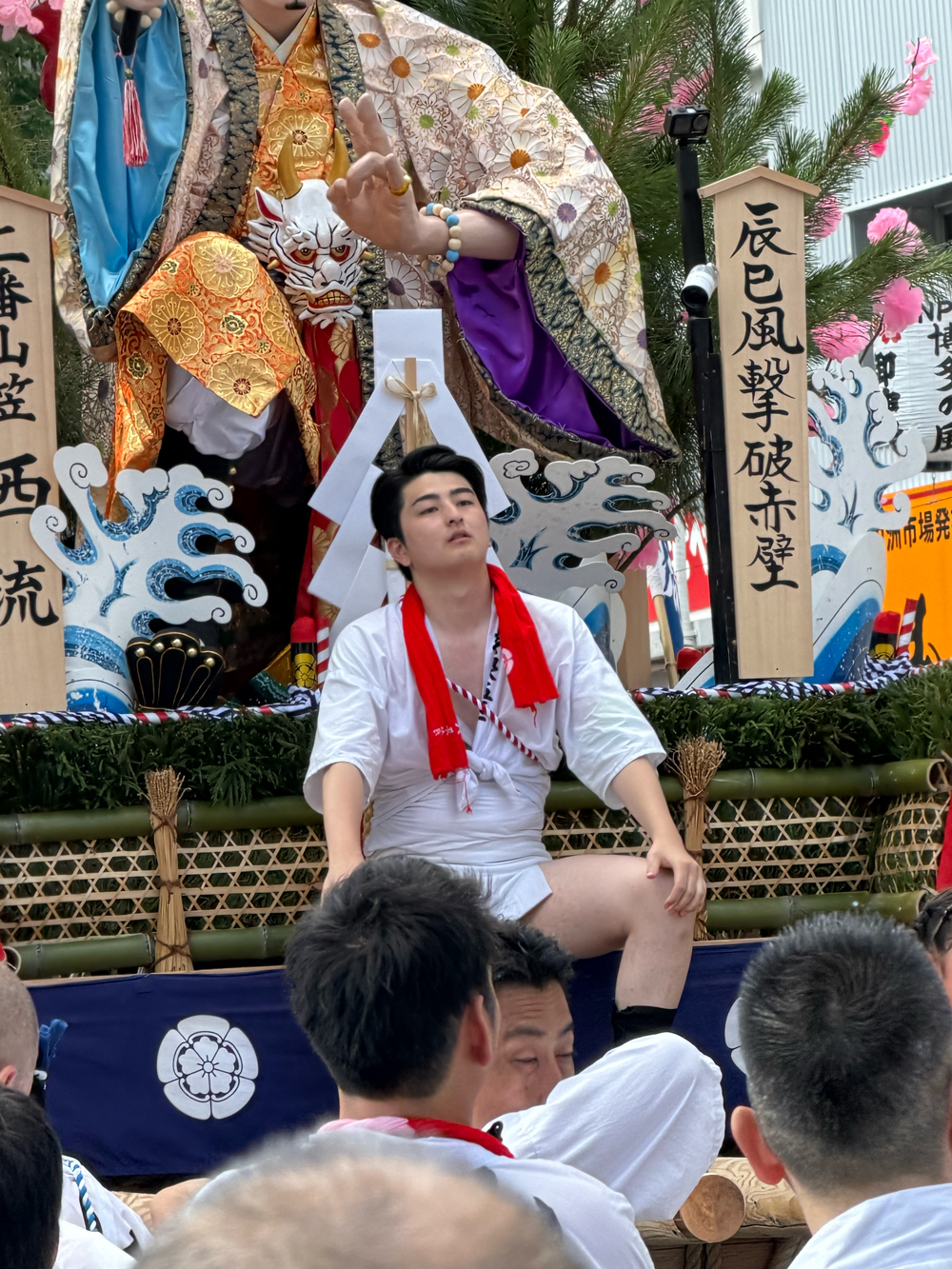
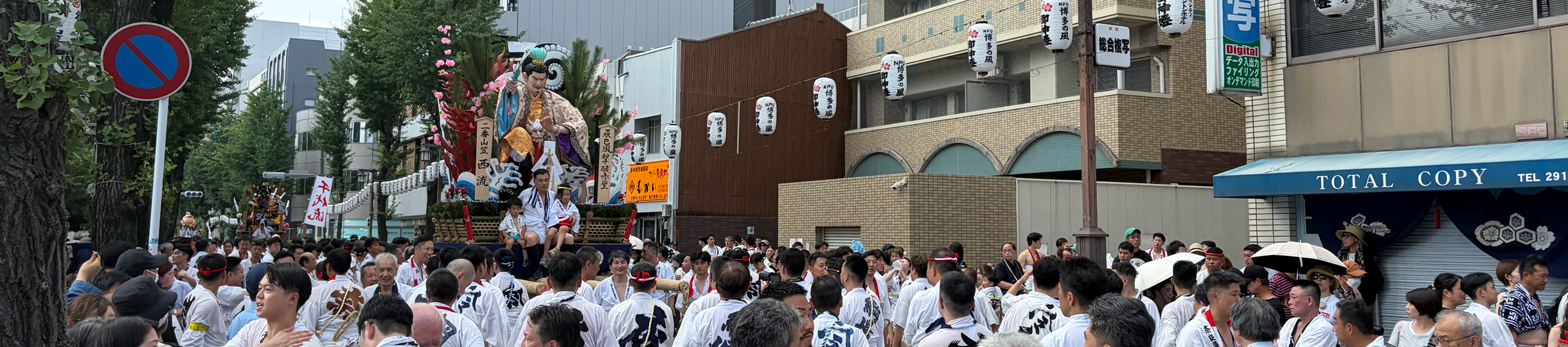
During the festival, Hakata felt much livelier than I had expected. Everywhere we went, we saw people dressed in happi coats and Yamakasa floats displayed throughout the city. When the rhythmic chants of the participants rose together with the cheers of the spectators lining the streets, there was a certain energy that made me think, “Yes… this is exactly what I wanted to experience with my own eyes.”
In the end, the summer trip I had expected to remember only as being extremely hot became a journey that made me fall in love with another side of Fukuoka. It reminded me that Japan’s charm isn’t limited to cherry blossoms, autumn leaves, or snow. Summer has its own stories to tell too.
Getting to Know Hakata Gion Yamakasa
Before taking you into the festival atmosphere, let’s get to know Hakata Gion Yamakasa a little better.
Hakata Gion Yamakasa is a historic summer festival held annually in Hakata from July 1 to 15, with Kushida Shrine at the heart of the celebrations. The tradition has been passed down for more than 780 years.
According to one account of its origins, in 1241, a Buddhist monk named Shoichi Kokushi stood on a platform and sprinkled sacred water around the city while praying for an epidemic to end. Over time, the ritual is believed to have evolved into the Yamakasa festival we know today—although several different theories about its origins still exist.
What made the festival so exciting for me wasn’t only its history. Once you see it in person, you immediately realise that Yamakasa isn’t simply a festival where beautifully decorated floats are put on display for people to photograph.
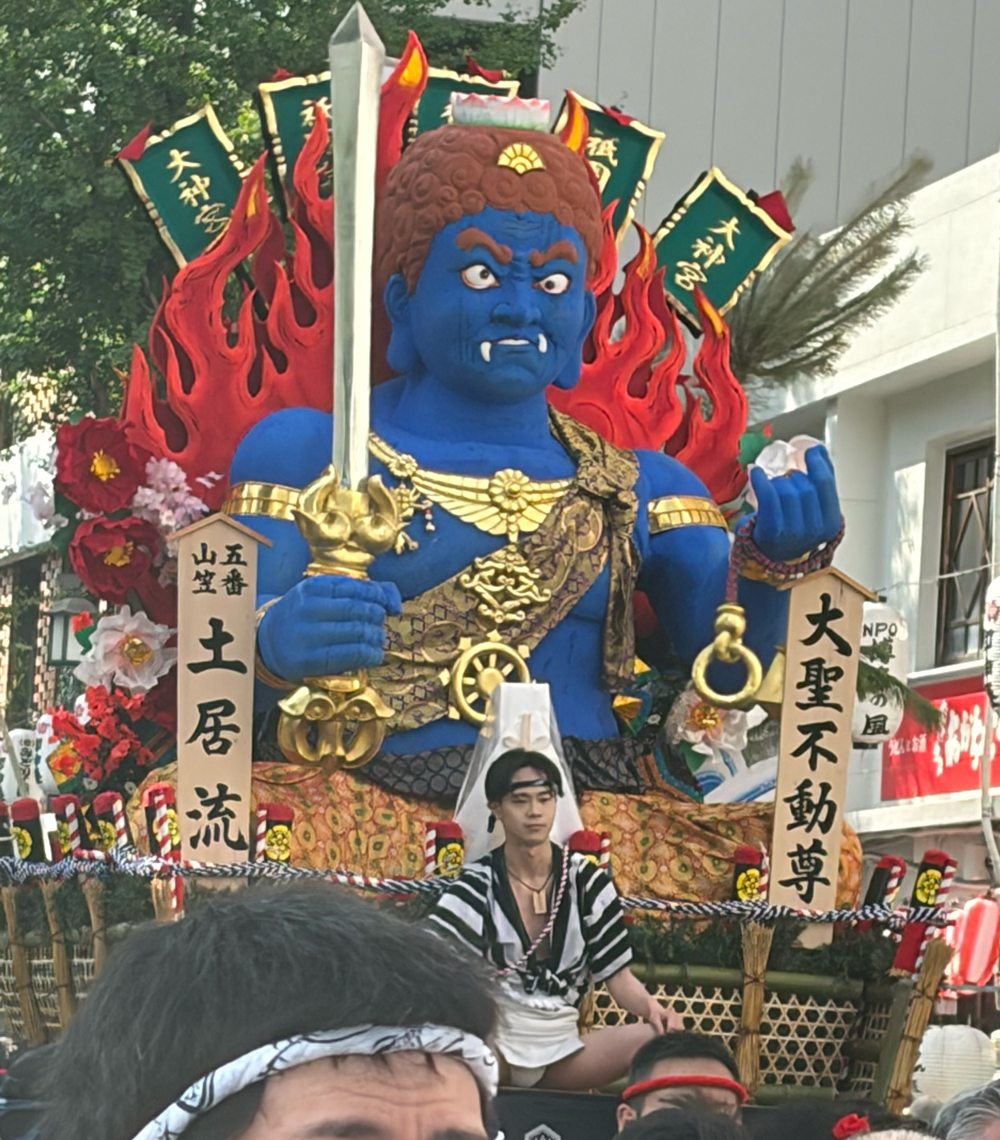
The stars of the festival are the structures known as Yamakasa, which can be divided into two main types. The first is the Kazariyama, a large and elaborately decorated float displayed at various locations throughout the city. The other is the Kakiyama, which is built to be carried by participants as they race through the streets. Teams representing different neighbourhoods of Hakata work together to preserve and pass down this tradition.
The grand finale of the festival is the Oiyama, held before dawn on July 15. The first team departs from Kushida Shrine at exactly 4:59 a.m., followed by the other teams carrying their Kakiyama along a route through the city amid rhythmic chants, enthusiastic cheers, and crowds who have been waiting since before sunrise.
Even photos and videos make it look fascinating, but experiencing it in person is completely different. There is the noise, the speed, the chaos, and the energy of an entire city all wrapped up in one event. That was exactly why I wanted to see Hakata Gion Yamakasa with my own eyes at least once.
Going to See the Oiyamanarashi
In the late afternoon, my friends and I took the train to Gion Station and walked towards Kushida Shrine to find a good spot for the Oiyamanarashi, the full-dress rehearsal held before the main Hakata Gion Yamakasa race.
And of course… it was extremely hot, haha. It was the kind of heat that made you sweat even while standing still. I made sure to bring some water so I could take small sips while waiting.
By the time we reached the shrine, quite a few people had already claimed their spots. We quickly found somewhere suitable and stood there beneath the blazing afternoon sun. Even though we had brought umbrellas, we didn’t really dare open them because we were worried about blocking the view or disturbing the people standing behind us.
So we simply stayed there under the sun…
This was the real Japanese summer, haha.
While we waited for 3:59 p.m., however, the atmosphere around us gradually became more and more interesting.
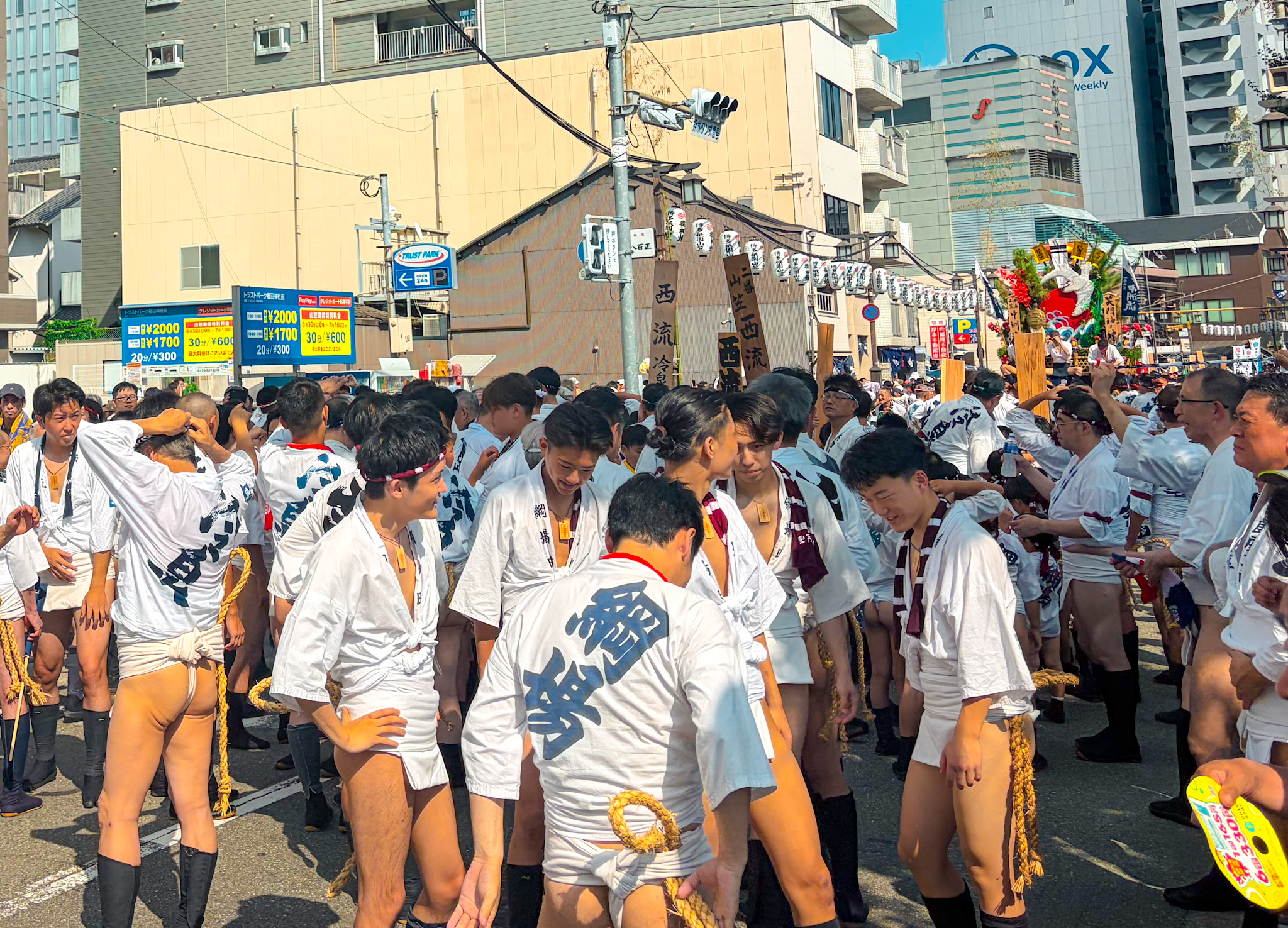
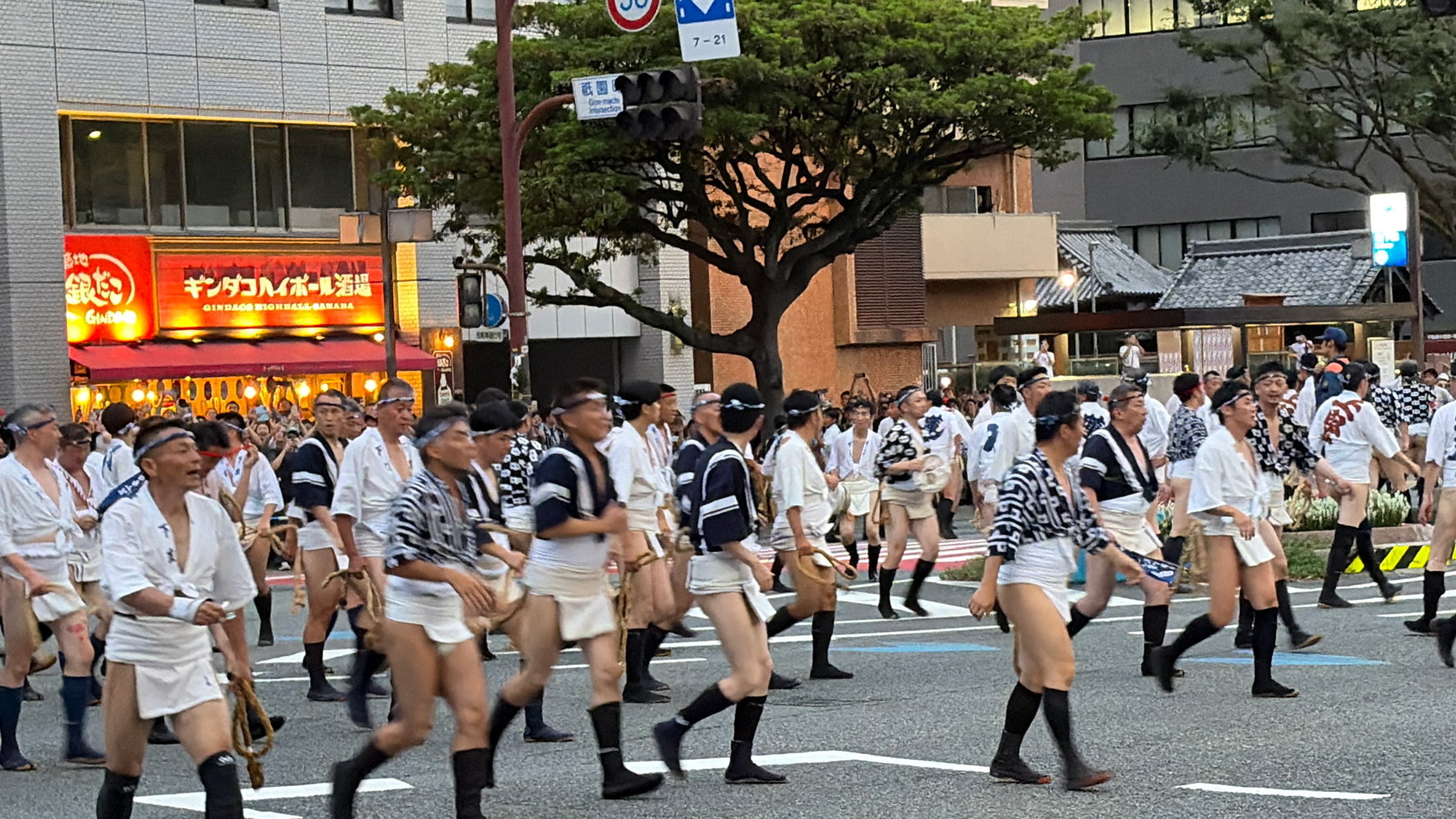
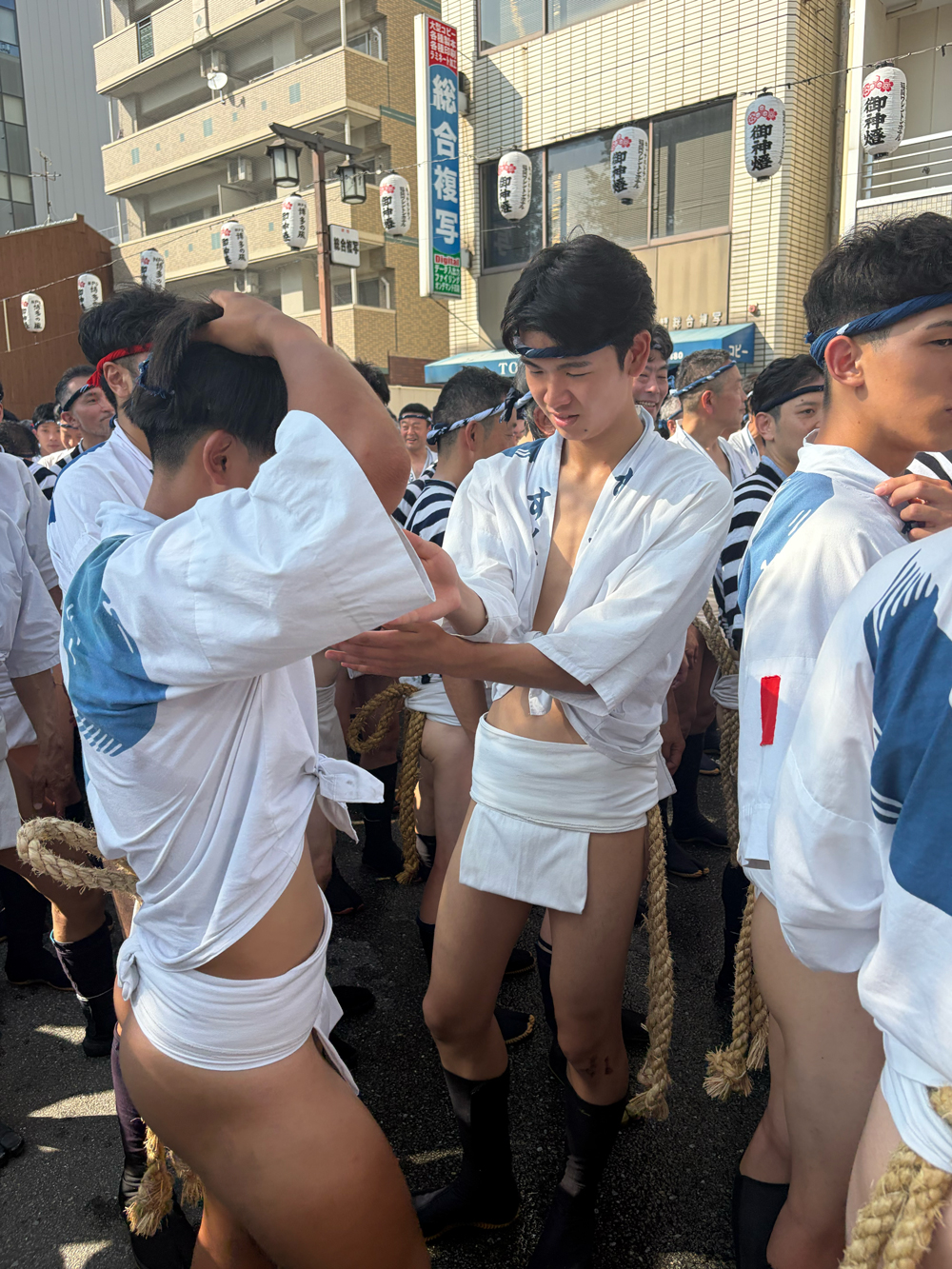
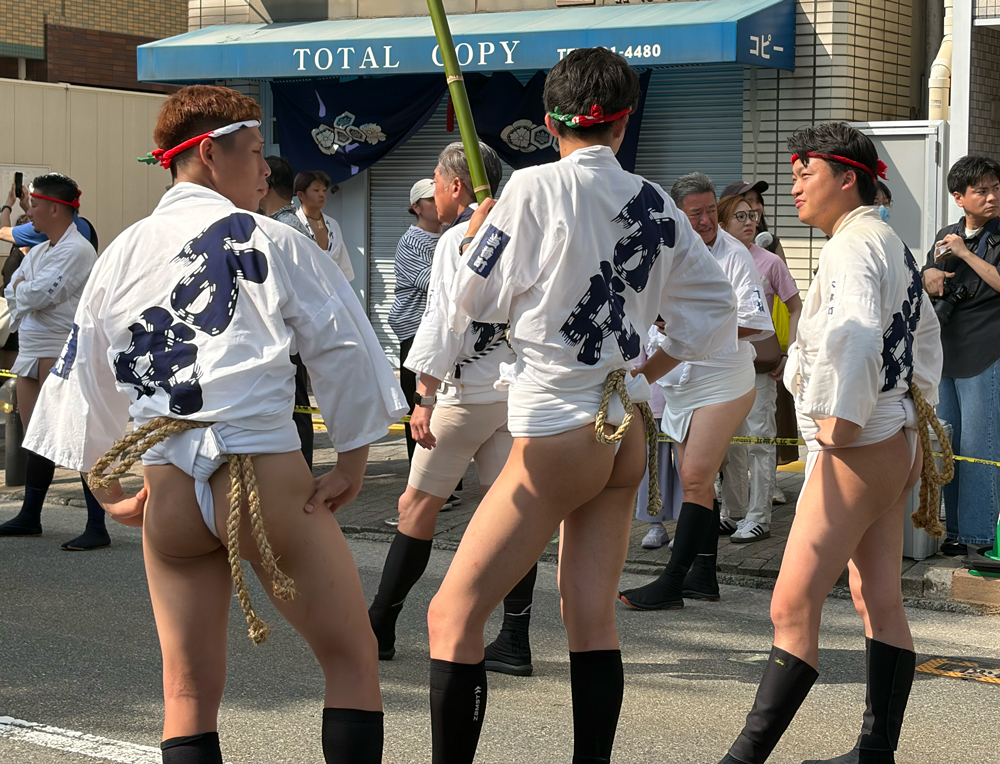
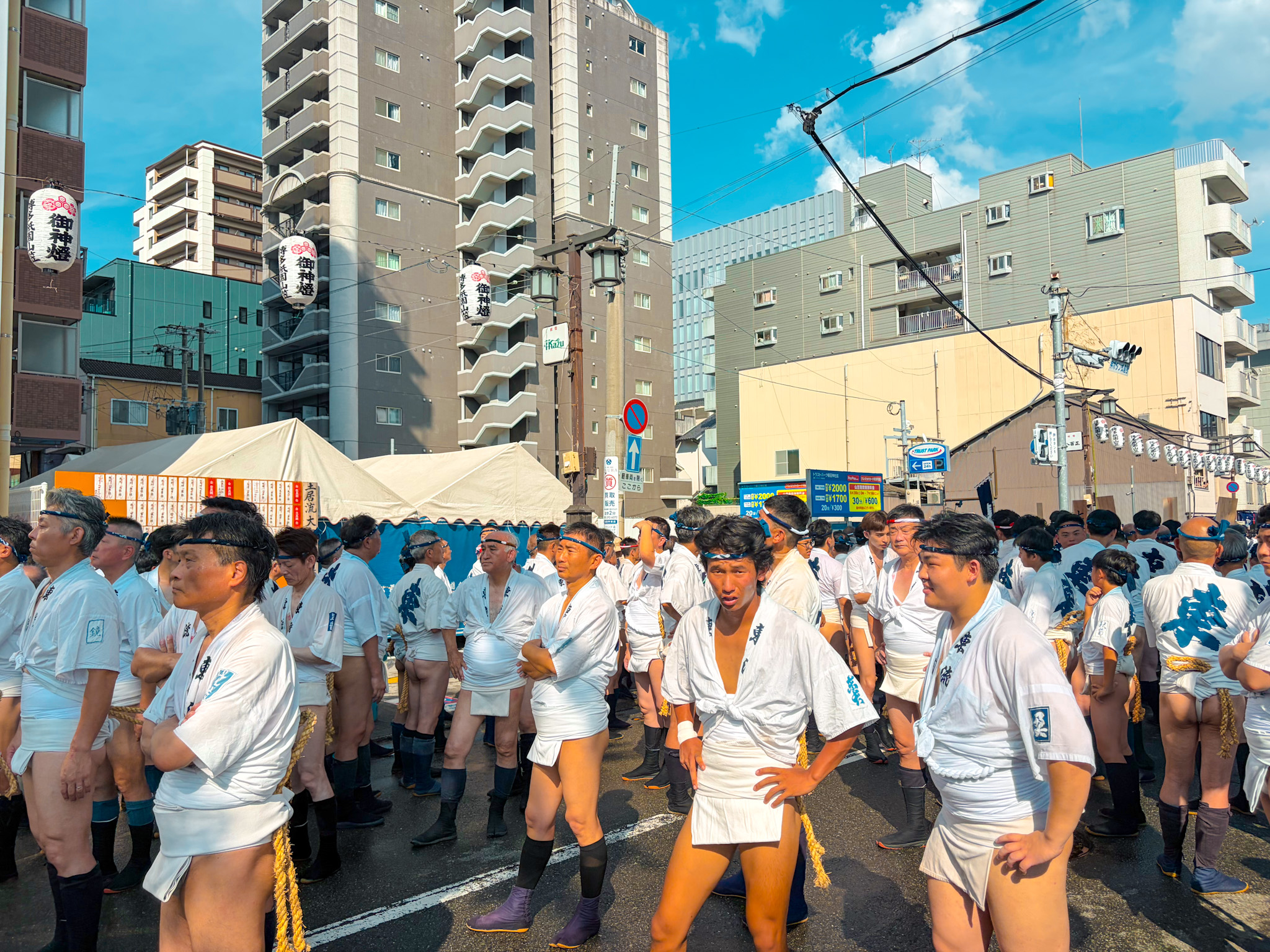
Groups of Japanese men dressed in traditional festival clothing began gathering at different points around the area. They wore Mizu Happi coats and traditional loincloths called Shimekomi. Some groups were getting ready, while others ran back and forth as though they were warming up before the event.
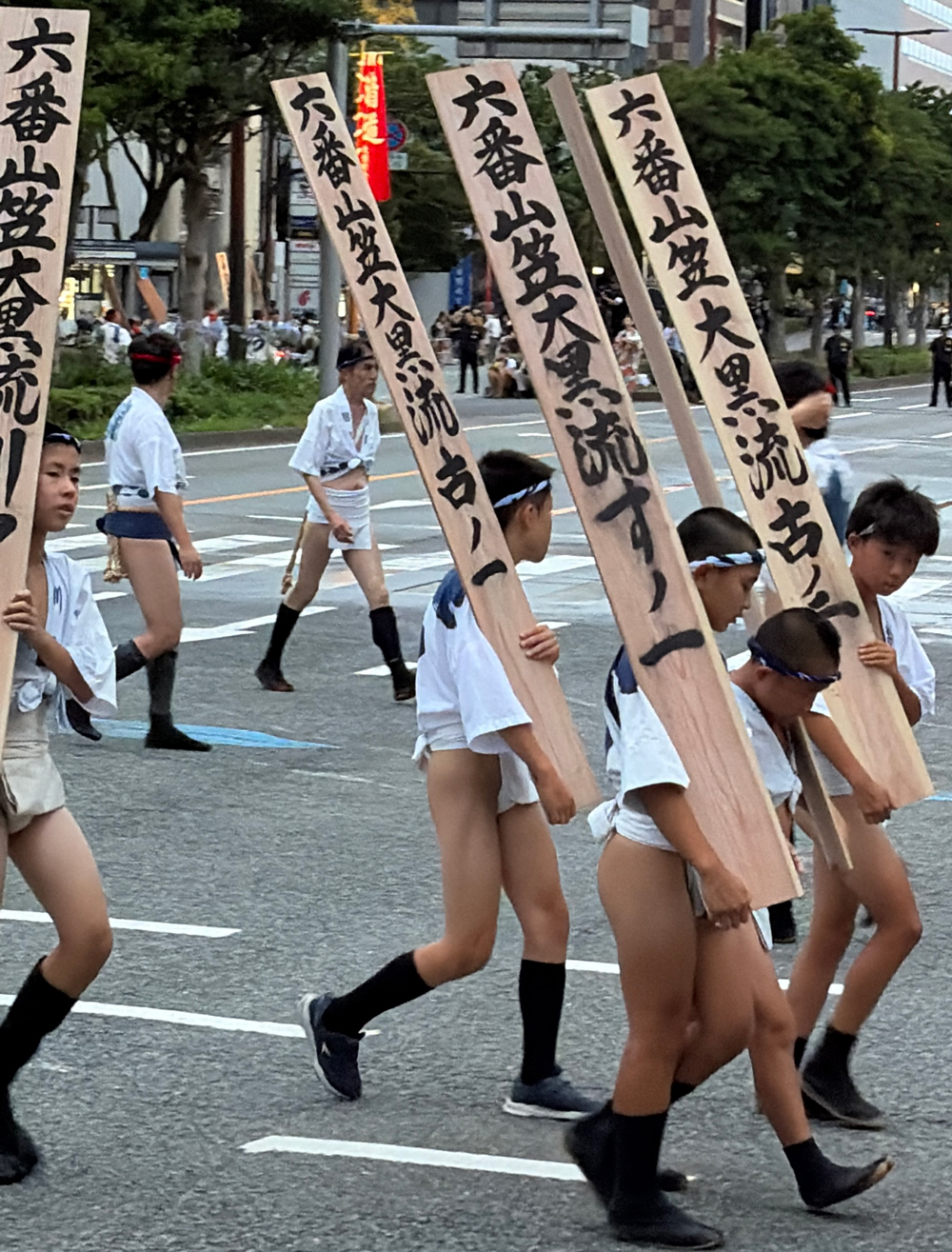
The children were especially adorable. Dressed just like the adults, they ran together in groups along the street, loudly chanting in rhythm:
“Oisa! Oisa! Oisa!”
Then, just like that, they disappeared down the road.
We hadn’t even seen a Yamakasa race past us yet, but the atmosphere, the chants echoing every now and then, and the festival participants moving through the streets were already making us feel that the event was truly about to begin.
Oisa! Oisa! Oisa! The Rehearsal Begins
And then, 3:59 p.m. finally arrived.
The previously relaxed atmosphere suddenly began to change. The noise around us grew louder, and everyone turned to look in the same direction. A signal sounded, followed by chants of “Oisa! Oisa!” drawing closer and closer.
The first team stood ready at the starting point. Then, with all their strength, everyone charged forward together.
The sight of the Kakiyama being carried directly past us lasted only a moment. One second it was clearly visible in front of us, and just a few heartbeats later, it had already raced past and disappeared from view. Only the chants of “Oisa! Oisa!” remained, continuing to echo along the street.
After the team had passed, an announcement was made. I couldn’t understand the Japanese, of course, haha. But judging by the excited reactions of the people around us, I assumed they were announcing the time achieved by each team.
Something that really caught my attention during the race was that the event didn’t involve only adults. There were young boys and girls, as well as people of many different ages, running alongside the procession. It made me realise that this wasn’t simply a festival belonging to one particular group—it truly felt like an event shared by the entire community.

Another thing we saw throughout the route was water being splashed onto the street, the participants, and the Yamakasa. At first, it reminded me of Songkran back home in Thailand, haha. The difference was that people weren’t splashing water just for fun. This water is called Kioimizu, and it is used to help cool both the carriers and the Yamakasa as they race through the streets in the summer heat.
As soon as one team had passed, the next team would move into position and prepare to start. This continued one team after another, and I began to realise that the place where we were standing was actually quite a strategic viewing spot. We could see the teams preparing before the start, forming their processions, and launching into the race from close range.
The teams continued arriving, lining up, and setting off one after another, leaving us barely enough time to rest our eyes. I can no longer remember the name of every team or the order in which they raced, but I still vividly remember the energy of the participants, the chants of “Oisa! Oisa!” filling the area, and the atmosphere that somehow kept us standing beneath the blazing sun much longer than we had expected.
No matter how much fun we were having, the sun was still doing its job very well, haha. By then, my face was beginning to sting—especially the back of my neck, which had been completely exposed to the sun. You could say it was one of the souvenirs Fukuoka’s summer gave me to take home.
Perhaps visiting a festival like this isn’t about remembering every single detail. You don’t have to know the name of every team or how quickly each one completed the route. Simply standing there, seeing it, hearing it, and experiencing it together with the people around you was already enough to create a wonderful memory for me.
Yamakasa Was Over, but Our Day Wasn’t
After watching the Oiyamanarashi, we left the area around Kushida Shrine looking as though Fukuoka’s summer sun had thoroughly defeated us. I was especially affected, with both my face and the back of my neck beginning to sting, haha.
Our next mission was therefore to find a pharmacy as quickly as possible and buy something to soothe my skin. This was only the first day of the trip, and we still had several days of travelling ahead of us. I couldn’t let myself get completely sunburnt right at the beginning.
More importantly, I didn’t want to return to Thailand with my skin divided into two different shades, haha.
Once the skin situation had been taken care of, we continued exploring at a more relaxed pace. This time, we decided to escape the heat and head inside a shopping centre. After standing in the sun for hours, simply walking around in air-conditioning felt as though we had been brought back to life.
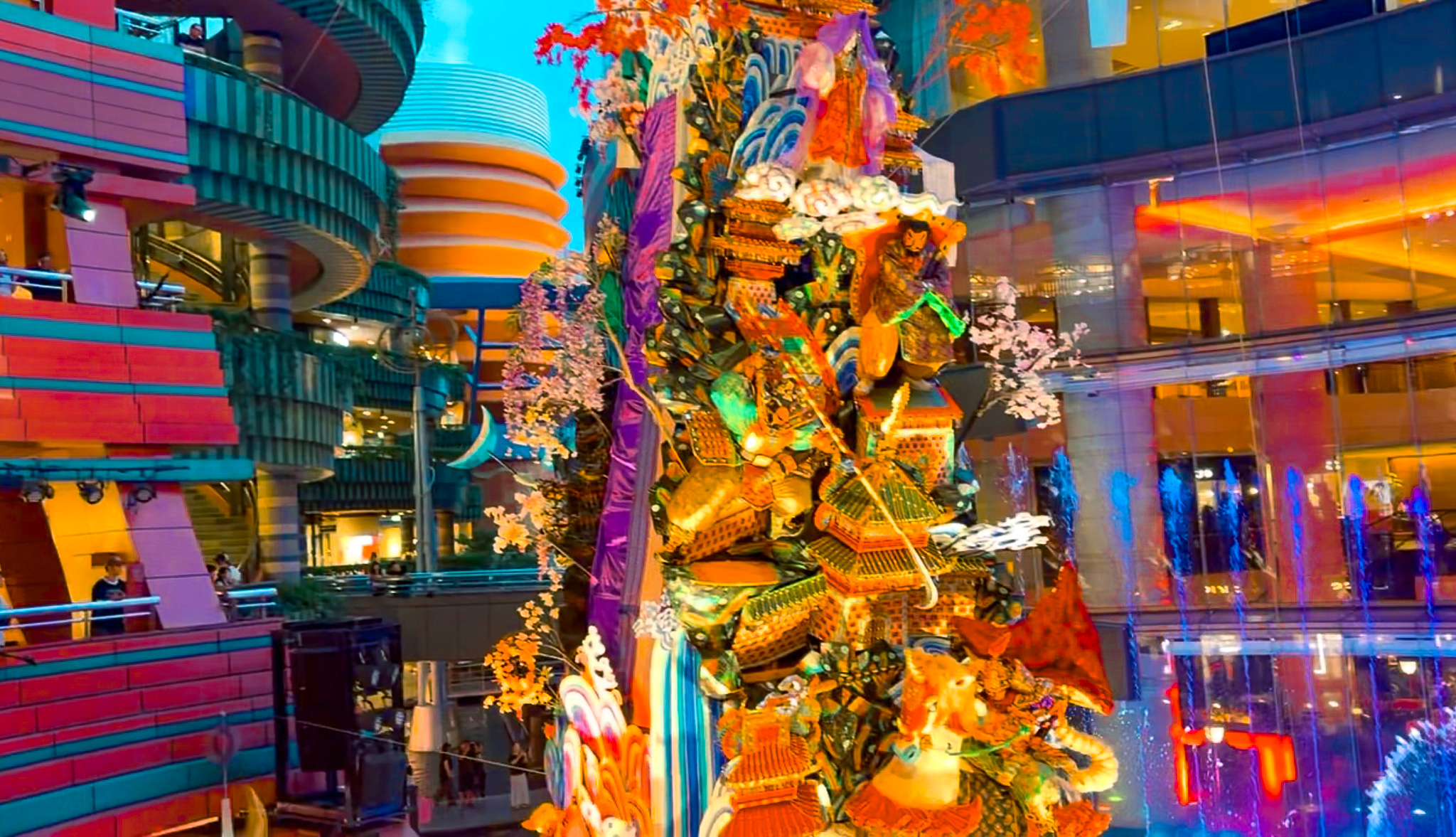
We wandered around Canal City Hakata, browsing the shops before stopping to watch the fountain show in the central courtyard. The atmosphere was completely different from what we had experienced just a few hours earlier. The chants of “Oisa! Oisa!” and the sight of people racing through packed streets had been replaced by music, fountains, and visitors strolling around at an easy pace.
But after walking since the afternoon and standing beneath the sun to watch Yamakasa for so long, something else inevitably began demanding our attention…
Our stomachs.
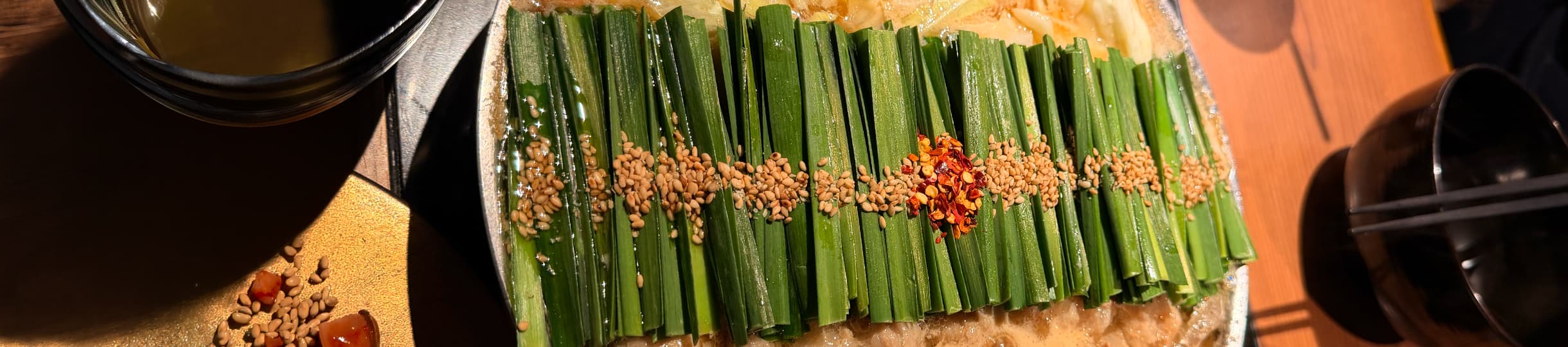
Since we were in Fukuoka, there was one dish we had already decided we absolutely had to eat for dinner: Motsunabe, Hakata-style offal hot pot and one of the city’s signature dishes.
After spending the day at a summer festival beneath the blazing sun, we were about to finish it with a steaming hot pot…
Yes, it really was a hot day from beginning to end, haha.
While I was in Fukuoka, I kept telling my friends throughout the trip, “Never again. Japan in summer is far too exhausting, haha.” There was the sun, the sweat, and the kind of heat that drained all your energy just from walking from one place to another.
But it’s strange. After returning home, whenever I think about that day, I don’t remember only how hot it was. I remember the chants of “Oisa! Oisa!”, the people lining both sides of the street, the children running alongside the procession, the fierce sunlight, my sunburnt face, and the steaming pot of Motsunabe we ate that evening.
What once made me think, “Once is enough,” has now somehow become, “If I ever get the chance, I’d love to go again.”
Perhaps travel memories are simply like that. While we are living through them, we may feel so exhausted that all we want to do is go home. But as time passes, those very moments become the ones that make us want to return.
And it seems that summer in Fukuoka has done exactly that to me, haha.